I Analyzed 50 High-Growth Startups. Here's What I Learned About Who They Hire.
Key findings
I analyzed the career histories of 2,349 employees at 50 venture-backed B2B startups at Series A and Series B. Here's what stood out:
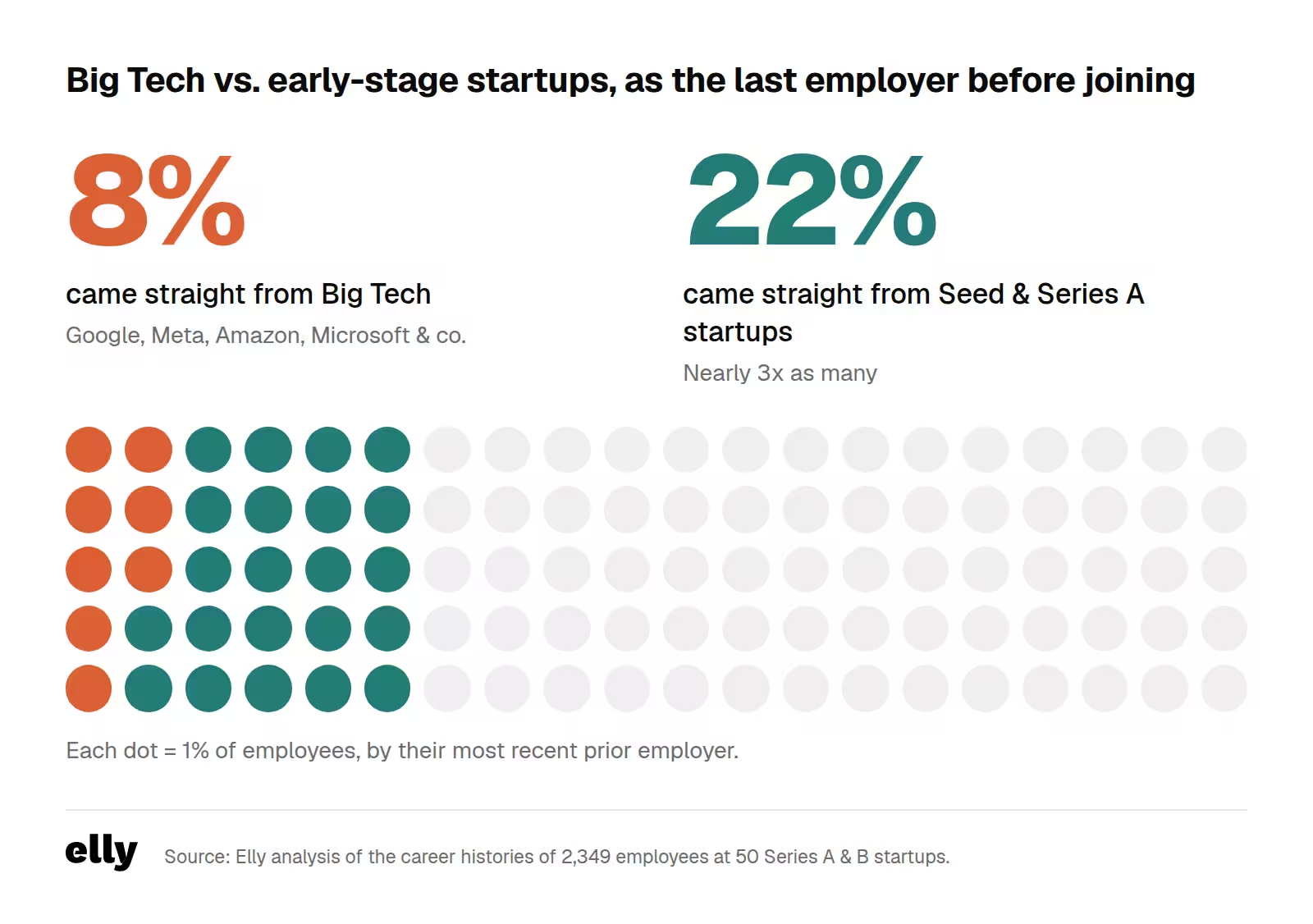
- Big Tech is a small source. Only 7.9% came to their startup directly from Big Tech, and just 0.38% had worked only at Big Tech companies.
- Early-stage startups are the largest source. 22.3% came most recently from a Seed or Series A startup, nearly 3x the Big Tech share.
- No single pipeline dominates. 18.7% came from established tech or large companies, 16.6% from Series C–D startups, 7.2% from Series E+ and 7.1% from Series B.
- Startup experience depends on the function. 75.7% of Recruiting & People employees had worked at another startup, compared with 53.8% in Engineering.
- Series C–D is an outsized talent pool. Of the 1,248 employees who came straight from another startup, 31.2% came from a Series C–D company, more than Series B and Series E+ combined. For Marketing, it was half.
- Startups hire from the stage ahead and the same stage. 31.4% of Series B startup-to-startup hires came from Series C–D companies, and 51.5% of Series B employees had already worked at another Series B startup.
As Head of Marketing at Elly, I've spent a lot of time thinking about how to help founders figure out who to hire, especially since founders told us their biggest fear is a bad hire.
It's a harder question than it sounds.
If you're a founder with a background in engineering, you probably have a pretty good sense of what a strong engineer looks like. The same is true if you've spent your career in sales, product, or marketing. But at some point, you're going to have to hire outside of your own area of expertise, and it gets harder to know what to look for.
Even within the same function, what makes someone effective can change quite a bit depending on the stage of the company.
I've experienced this myself throughout my career. I started out at small agencies, where I learned what it was like to work on a very small team, wear a lot of hats, and stay close to the actual work.
Later, I worked at a Series B company. There was more infrastructure around me, a larger sales organization, more operations support, and more people to coordinate with.
Then at Typeform, I helped lead a 30+ person marketing organization. Something as simple as shipping a new ad could involve my team, a creative brief, a kickoff, the creative production process, and eventually publishing. I was much further removed from the hands-on work.
None of those environments was necessarily better than the others. They just taught me different things.
That's what got me thinking about hiring. The person who has learned to do marketing at a 30-person startup has probably developed a different set of skills and instincts than someone who has spent the last five years at a 2,000-person company.
The same thing applies to the companies themselves. Going from 0→1 and trying to find product-market fit requires a different kind of experience than working at a company with an established customer base that's trying to move upmarket and increase ACV.
I started wondering where startups were actually finding people with the experience they needed.
So I decided to look at the data.
I Wanted to Know Who Startups Actually Hire
There's a pretty common shortcut when evaluating candidates: looking at the companies on their resume.
A recognizable company can act as a form of social proof. If someone worked at Google, Meta, or another well-known technology company, it's easy to assume that experience is a strong signal.
I've always been a little skeptical that a company logo tells you very much on its own. But I realized I could actually look at the backgrounds of people working at high-growth startups and see what the data showed.
I identified 50 venture-backed, B2B startups across Series A and Series B and looked at the employees at those companies, including their previous employers and career histories.
I wasn't trying to figure out the formula for the perfect startup employee. I also don't have performance data, so this research can't tell us which backgrounds produce better employees.
I wanted to understand a much simpler thing: who are high-growth startups actually hiring?
The first finding surprised me a little.
1. Do Startups Hire People From Big Tech?
When I looked at someone's most recent employer before joining their current startup, only 7.9% came from Big Tech. By Big Tech, I mean the largest technology companies, such as Google, Meta, Amazon, Microsoft and Apple. Just 0.38% had careers consisting exclusively of Big Tech companies.
There are plenty of recognizable companies represented in the dataset. Google, Meta, Amazon, Microsoft, Salesforce, and Apple all show up repeatedly.
That doesn't mean Big Tech experience isn't valuable. It just means that Big Tech represents a relatively small part of the talent pool at these startups. A big-name logo can even work against a candidate now.
“All the fake profiles have these companies on their resume or LinkedIn,” says Abe Weiser, Head of Search and Talent Acquisition at Elly. “It’s almost becoming a negative, too good to be true.”
The largest individual source was actually early-stage startups. 22.3% of employees came most recently from a Seed or Series A company. Another 18.7% came from established technology or large companies (such as HubSpot, Atlassian, Adobe, Salesforce and Oracle), and 16.6% came from Series C–D startups.
I found that more interesting than the Big Tech number itself.
It made me start thinking more about the environment someone has worked in and less about whether the company on their resume is recognizable.
Someone coming from Google has learned to operate in a very different environment from someone coming from a 40-person startup. But someone coming from a 2,000-person growth-stage startup has also had a very different experience from someone coming from a 30-person company.
That context seems worth paying attention to when you're trying to figure out whether someone's experience actually maps to the job you're hiring them for.
And once I started looking at startup experience more closely, the data got even more interesting.
2. Where Do Startups Hire From?
No single source dominates startup hiring.
Among the 2,349 employees in the dataset, the largest group came most recently from early-stage startups at 22.3%.
18.7% came from established technology or large companies. 16.6% came from Series C–D startups. 7.9% came from Big Tech. 7.2% came from Series E+ companies, and 7.1% came from Series B companies.
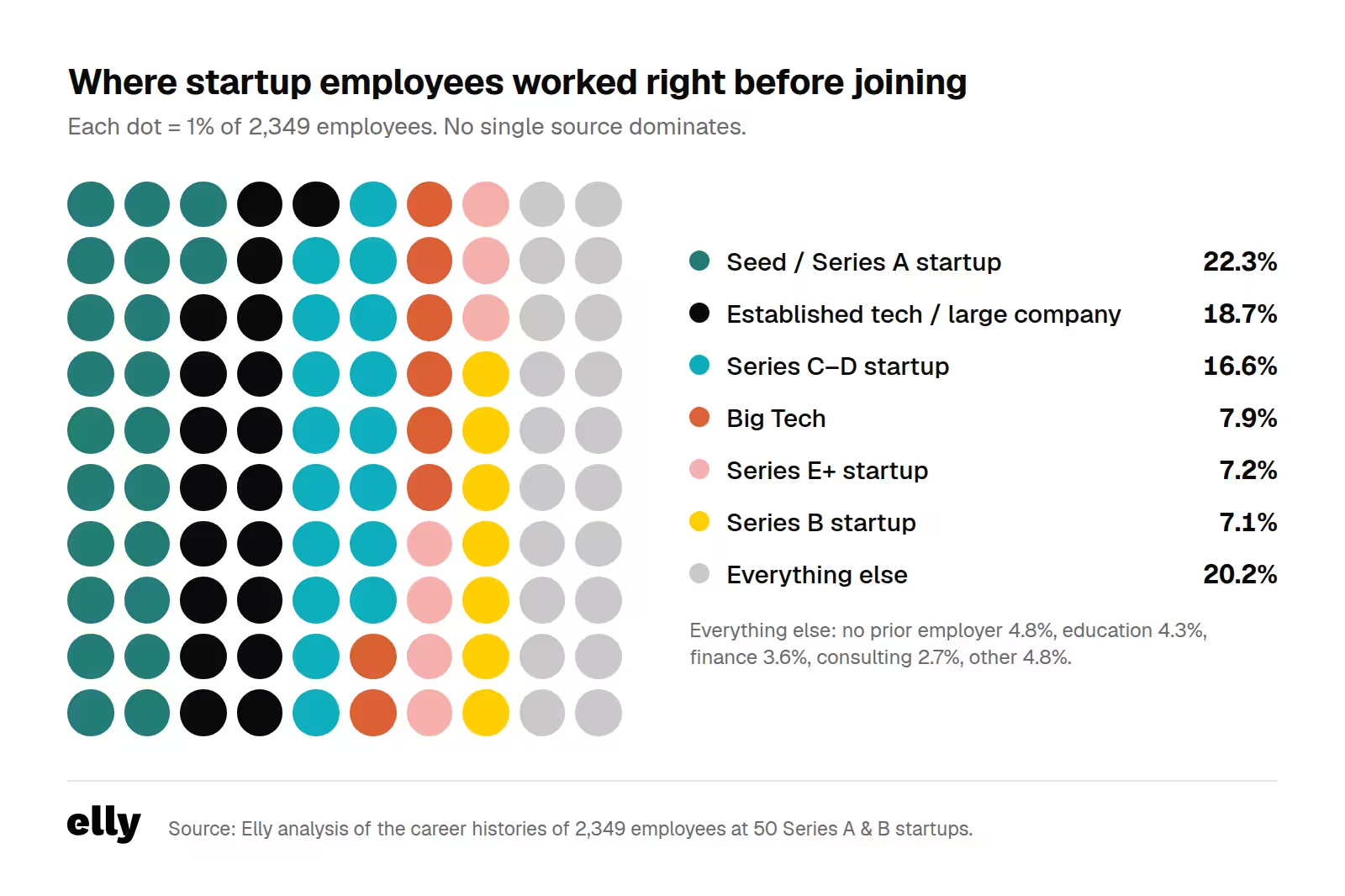
The more I looked at this, the less useful the question "Where do startups hire from?" seemed to be on its own.
The answer depends on what you're hiring for and what kind of experience you need.
There are also plenty of recognizable companies in the dataset. Google appears in 114 employees' career histories, Meta in 86, Amazon in 85, and Microsoft in 72. Salesforce, AWS, Oracle, and Apple show up as well.
So it's not that recognizable companies don't produce startup talent. They clearly do.
It's that there's a difference between having worked at a recognizable company and being part of the dominant talent pipeline.
The latter is much more varied.
3. Which Startup Roles Are Most Likely to Have Startup Experience?
I expected startup experience to be most common in functions like sales, marketing, and product, where working in a less structured environment might seem particularly relevant.
That wasn't quite what the data showed.
The share of employees who had worked at another startup at some point in their career was highest in Recruiting & People at 75.7%, followed by Finance at 74.4% and Customer at 73.8%. Sales was 67.7%, Product was 66.1%, and Marketing was 61.4%. Engineering was 53.8%.
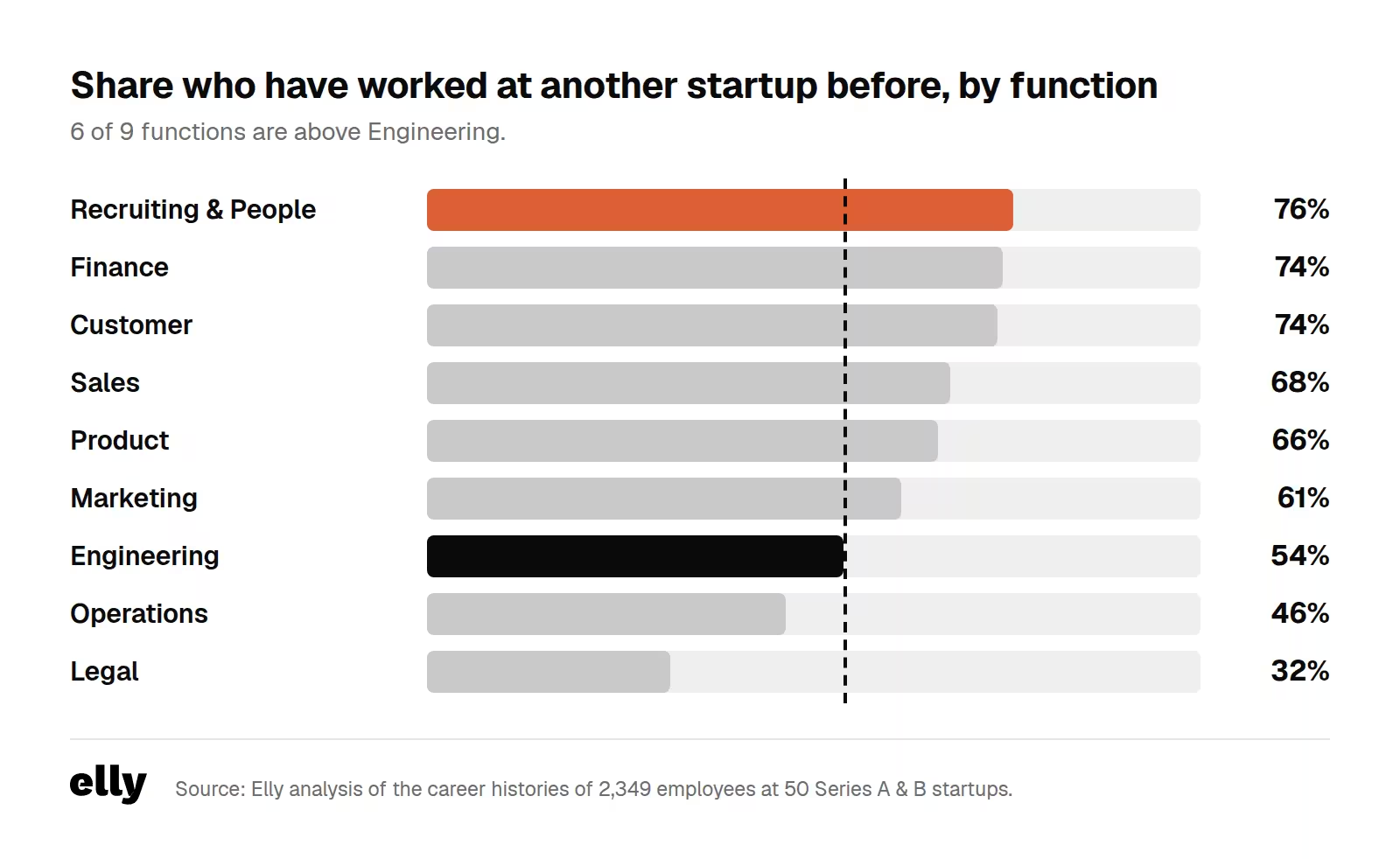
That surprised me.
It means "startup experience" isn't evenly distributed across an organization. A candidate with startup experience looks pretty different depending on the function you're hiring for.
And when I looked at the most recent employer rather than someone's entire career, the differences became even clearer.
Engineering had the highest exposure to Big Tech, but even there, Big Tech was only 14.0% of the most recent employers. Early-stage companies accounted for 22.2%, established tech for 21.5%, and C–D startups for 16.9%.
For comparison, only 2.5% of Sales employees and 3.8% of Marketing employees came most recently from Big Tech.
Marketing had its own interesting pattern. 28.2% came most recently from established tech companies, 26.9% from C–D startups, and 16.7% from early-stage startups. Only 3.8% came from Big Tech.
My read is that the relevant experience for a role often has more to do with the environment someone has operated in than the prestige of the company itself.
A marketer who has spent several years building a function at a company with some scale may have learned things that are difficult to learn at a 20-person startup. But that doesn't necessarily mean they need to have worked at Google or Meta.
4. Which Stages Do Startup Hires Come From?
This was probably the finding I found most interesting once I started looking specifically at startup-to-startup moves.
Of the 1,248 employees whose most recent employer was another startup, 31.2% came from a Series C–D company.
For comparison, 41.9% came from Seed/Series A companies, 13.5% from Series E+ companies, and 13.3% from Series B companies. Seed/Series A is the biggest bucket, but C-D alone is bigger than Series B and Series E+ combined.
That makes C–D a surprisingly large part of the startup-to-startup talent pool.
And it's particularly pronounced in certain functions.
Among startup-to-startup hires, 50.0% of Marketing hires came from C–D companies, as did 36.8% of Sales hires and 32.8% of Engineering hires. Product was 26.7%, and Customer was 16.0%.
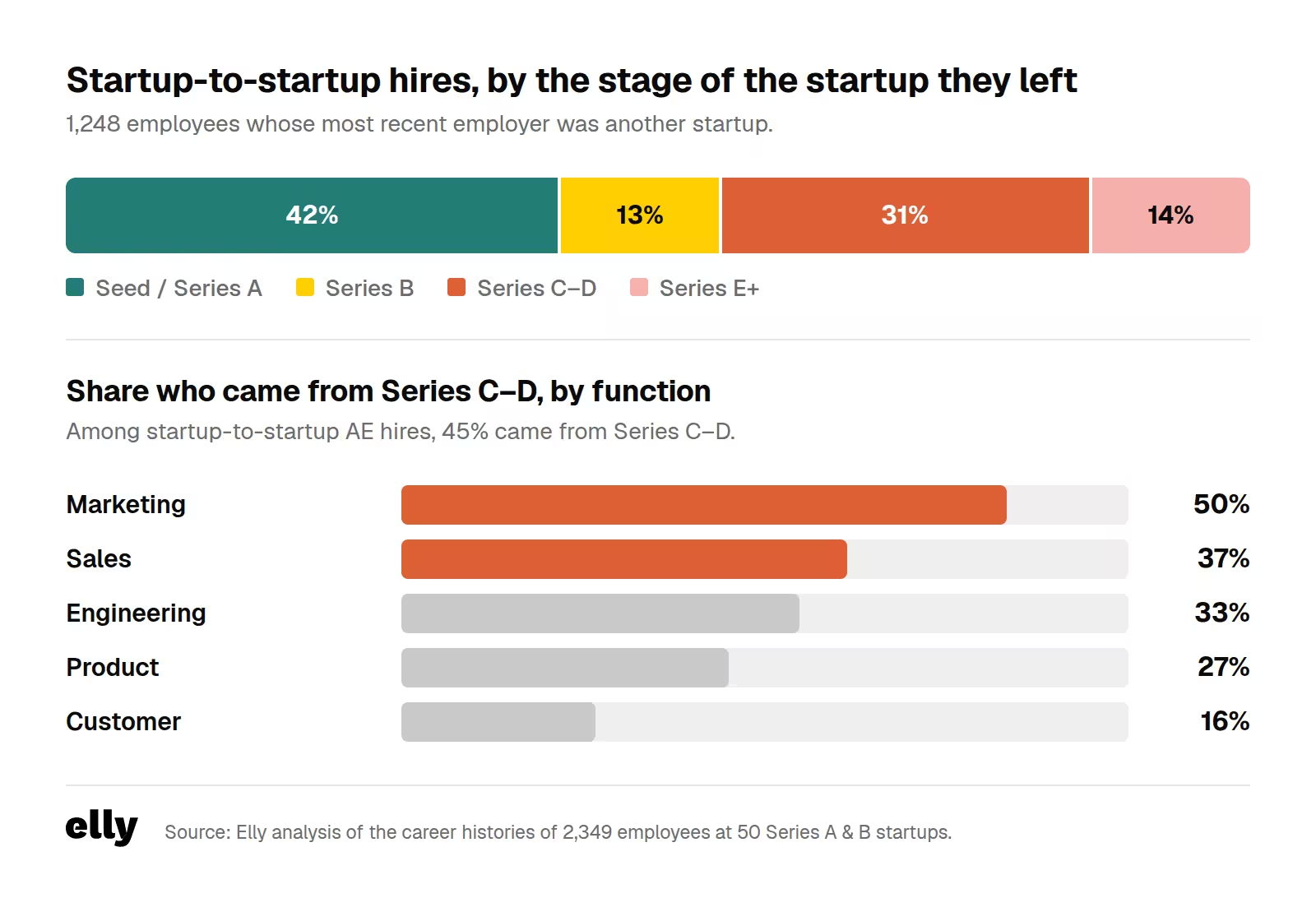
I think there's a pretty intuitive reason this might happen.
A Series C–D company has usually gone through some of the messy early stages of figuring out the product, finding customers, building a team, and establishing repeatable processes. But it's still operating in an environment that looks much more like a startup than a large public company.
For a founder hiring someone to build a function or scale an existing motion, that can be a useful combination of experiences.
It's also one of the reasons I wouldn't automatically equate "startup experience" with "experience at a very early-stage startup."
Sometimes the most relevant person is someone who has already seen what happens a few steps down the road.
5. Do Startups Hire From Companies One Stage Ahead?
Once I started looking at the relationship between a company's current stage and the stage of the person's previous startup, another pattern emerged.
Among startup-to-startup hires, 12.4% of Series A hires came directly from Series B companies.
For Series B companies, the number was much higher: 31.4% came directly from Series C–D companies.
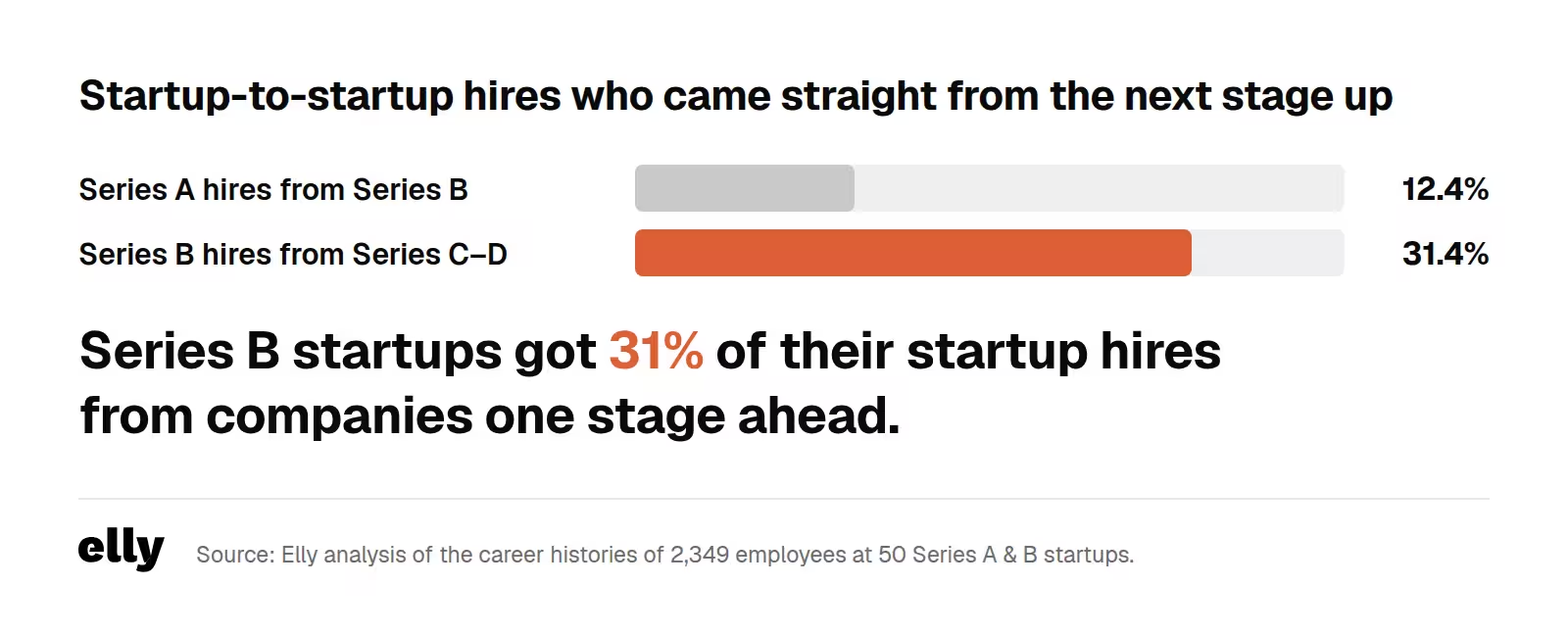
That makes sense to me.
As a company grows, the problems change. The team gets bigger, processes become more important, there are more customers to support, and the organization starts running into problems that didn't exist six months earlier.
Someone who has already experienced those problems may be able to bring useful context to the next stage.
But I don't think the data supports a simple "always hire from the stage ahead" rule.
Because there's another finding that complicates the story.
6. How Common Is Same-Stage Startup Experience?
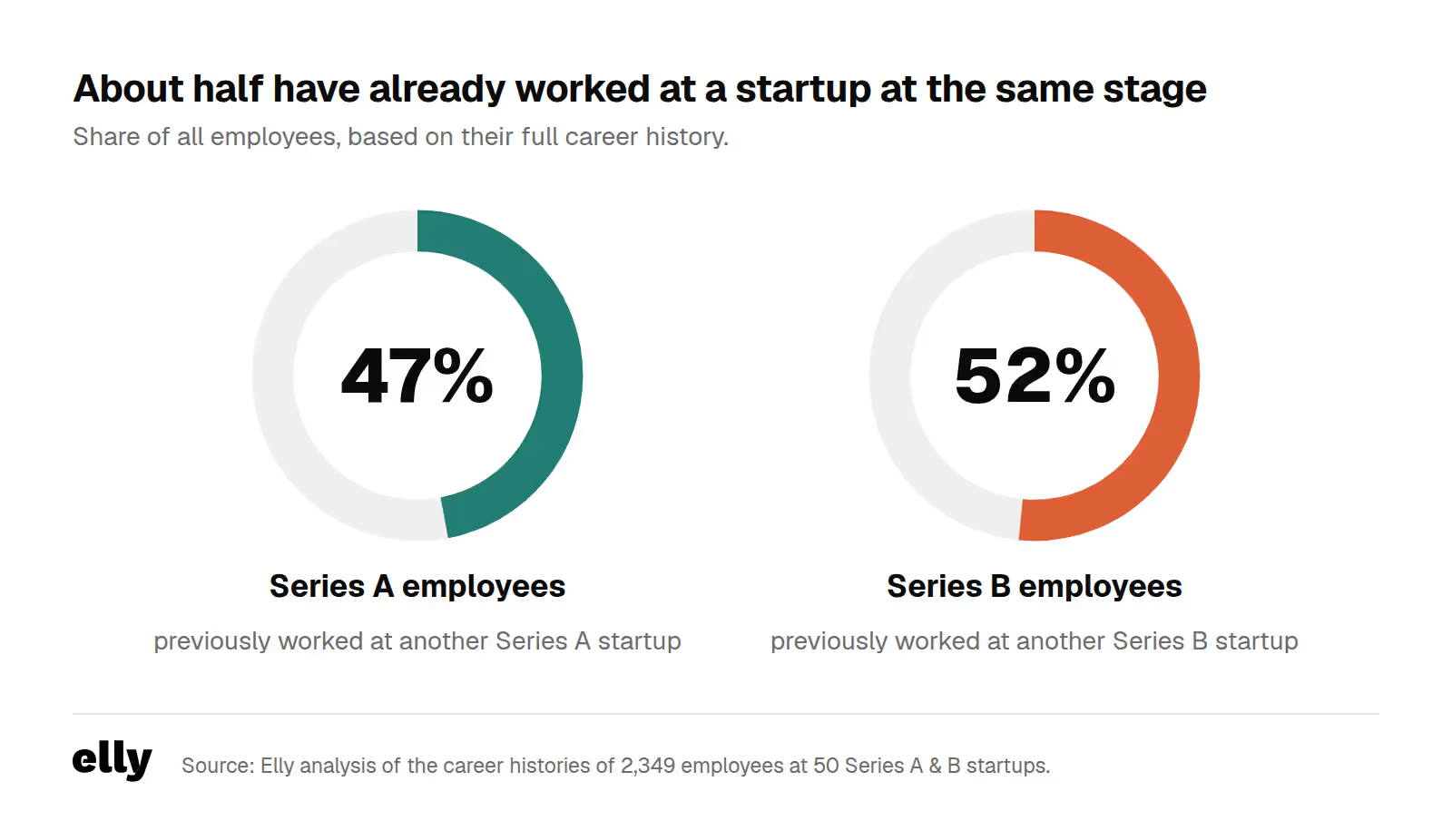
About half of the employees at the Series A and Series B companies in the dataset had already worked at another startup at the same stage.
47.0% of employees at Series A companies had prior experience at another Series A startup.
For Series B, it was 51.5%.
I actually like this finding because it makes the overall picture more nuanced.
The data suggests startups are hiring people who have already operated in the environment they're in, as well as people who have operated in the environment they're moving toward.
Those are different kinds of experience, and both seem to show up frequently.
It also brings me back to the question I started with: what should a founder actually look for when evaluating someone?
What I Think This Means for Founders
After looking through all of this, I think I've become less interested in the logo at the top of someone's resume.
The more useful thing to understand is the environment they've actually learned to operate in.
Have they worked at a company that's roughly the same stage as yours? Have they seen what happens when a company gets one or two stages ahead? Have they built something from scratch, or learned how to scale something that already works? Have they worked with a large team and lots of infrastructure, or learned to operate without much of either?
None of those experiences is inherently better.
They just prepare people for different problems.
And that's probably the biggest takeaway I took from this research. When you're hiring for a startup, I would spend less time asking whether someone's background looks impressive and more time understanding what they've actually had to do in the environments where they worked.
That's a harder thing to evaluate than looking at a logo.
But I think it's probably a much more useful signal.
FAQ: Who Do Startups Hire?
What percentage of startup employees come from Big Tech?
In an analysis of 2,349 employees at 50 Series A and B startups, 7.9% came to their current startup directly from a Big Tech company such as Google, Meta, Amazon, Microsoft or Apple.
Where do most startup employees come from?
The largest single source is other early-stage startups: 22.3% came most recently from a Seed or Series A company. Established tech and large companies (18.7%) and Series C–D startups (16.6%) are the next largest.
Do startups prefer candidates with startup experience?
Most employees in the study had it, but it varies by role. 75.7% of Recruiting & People employees had worked at another startup, compared with 61.4% in Marketing and 53.8% in Engineering.
Which companies do startups hire from most?
The most common names in employees' career histories are Google (114 employees had worked there at some point), Meta (86), Amazon (85) and Microsoft (72). But only 7.9% came to their startup directly from Big Tech; most came from other startups and companies.
Should a Series A startup hire from later-stage startups?
The data shows both patterns. Startups hire from the stage just ahead (31.4% of Series B startup-to-startup hires came from Series C–D), but about half of employees also have experience at the same stage. The more useful question is which environment matches the problems the role has to solve.
Does working at a well-known company make someone a better startup hire?
This research can't answer that, because it covers hiring history, not performance. It shows where startup employees came from, not which backgrounds perform best.
Methodology
I identified 50 venture-backed, B2B startups across Series A and Series B who were listed on top startup lists and looked at the employees at those companies, including their previous employers and career histories. The career data was collected and analyzed in September 2026.
The analysis includes 2,349 employees and categorizes their most recent prior employer by company stage and type. I also looked at whether employees had prior startup experience anywhere in their career and, for startup-to-startup moves, compared the stage of their previous company with the stage of their current company.
There are obvious limitations to this approach. The sample is relatively small and focused specifically on venture-backed B2B companies at Series A and B, so these patterns shouldn't be treated as representative of every startup or every type of company.
More importantly, this is hiring-history data, not employee-performance data. It can tell us where people came from, but it can't tell us which background makes someone a better employee.
That's a distinction I think is important to keep in mind.
The goal of this research wasn't to come up with a formula for the perfect startup hire. It was to get a better understanding of the talent pools that high-growth startups are actually drawing from.
.avif)